
Why Is 0 Called Love in Tennis? The Real Meaning Explained
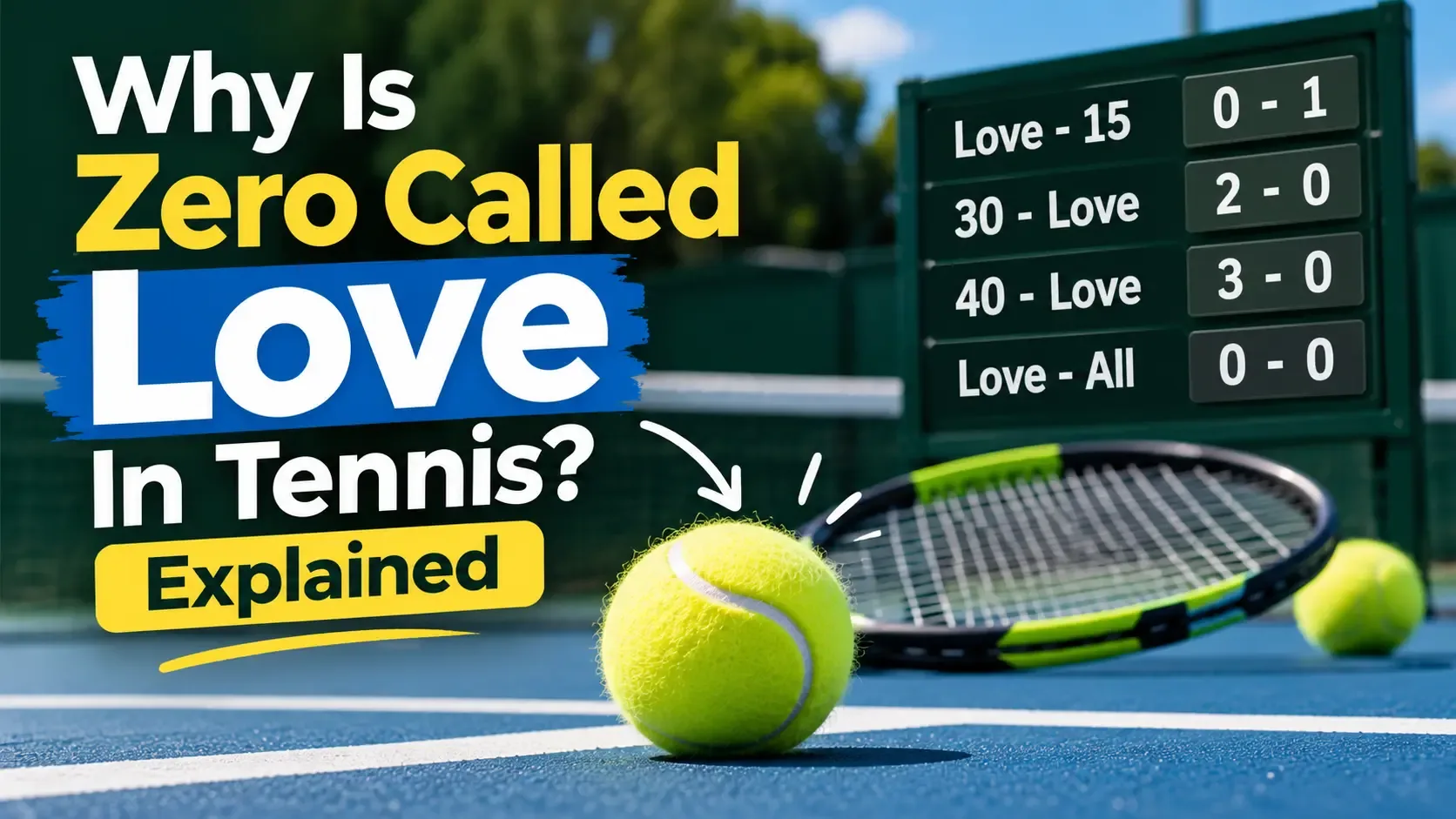
f you have ever watched a tennis match and heard the score called “love-15” or “40-love,” you may have wondered why tennis uses the word love for zero. It sounds unusual, especially when most sports simply say zero. In tennis, however, love has a very simple meaning: it represents a player who has won no points in the current game.
The interesting part is not what love means today, but where the word came from. The exact historical origin is not proven. Several explanations have been proposed over the years, and some popular versions are repeated so often that they can sound like established facts. The safest answer is that the modern tennis rule is clear, while the original etymology of “love” remains uncertain.
What Does Love Mean in Tennis?
Love means zero points in a tennis game. If the score is love-30, the player whose score is announced first has won zero points while the opponent has won two. If the score is 40-love, the first player has won three points and the opponent has none.
The normal scoring sequence inside a tennis game is:
0 points = Love
1 point = 15
2 points = 30
3 points = 40
The next winning point normally wins the game, subject to the two-point requirement after deuce.
The server's score is announced first. That makes “love-15” and “15-love” different scores even though both contain the same two numbers.
Where Did the Word Love Come From?
The origin of “love” is debated. One famous explanation connects it with the French word “l'oeuf,” meaning egg, because the written number zero can resemble an egg. Another explanation connects love with the idea of playing “for love,” meaning playing for nothing.
Neither explanation should be presented as a proven historical fact. The word was already associated with a score of zero in racket-sport traditions, but the precise route by which the expression became standard in tennis is not completely settled.
That distinction matters because tennis history contains many attractive explanations for its unusual terminology. A popular story is not automatically the same thing as documented evidence.
Why Does Tennis Say Love Instead of Zero?
Tennis developed a specialized scoring vocabulary that has remained in use for centuries. Love is now simply the standard term for zero in the sport. Players, officials, commentators and scoreboards all use it.
Once you understand that love means zero, the rest of the score becomes much easier to follow. For example, a score of 30-love means two points for the server and none for the receiver. A score of love-40 means the receiver is three points ahead within that game.
The term also appears in expressions such as a “love game,” which means a player wins a game without losing a single point.
How Love Fits Into Tennis Scoring
Love is only the first step in the point-scoring system. After a player wins one point, the score becomes 15. The second point makes it 30, and the third makes it 40.
If both players reach 40, the score is called deuce rather than 40-40. From deuce, a player generally needs to win two consecutive points to win the game: one point creates advantage, and the next wins the game.
For a broader explanation, see How Does Tennis Scoring Work? and Tennis Tiebreak Rules. You can also use the Tennis Terminology Glossary to understand terms such as deuce, advantage, ace and break point.
The Simple Answer
So, why is 0 called love in tennis? Because love is the traditional tennis term for zero. The meaning is certain, but the exact historical origin of the word is not.
That is one reason tennis can feel strange to new viewers: the sport has preserved an old scoring language while modern matches are played with electronic scoreboards, instant reviews and advanced officiating technology.
Once you remember one rule love means zero phrases such as “love-15,” “30-love” and “40-love” become easy to understand.